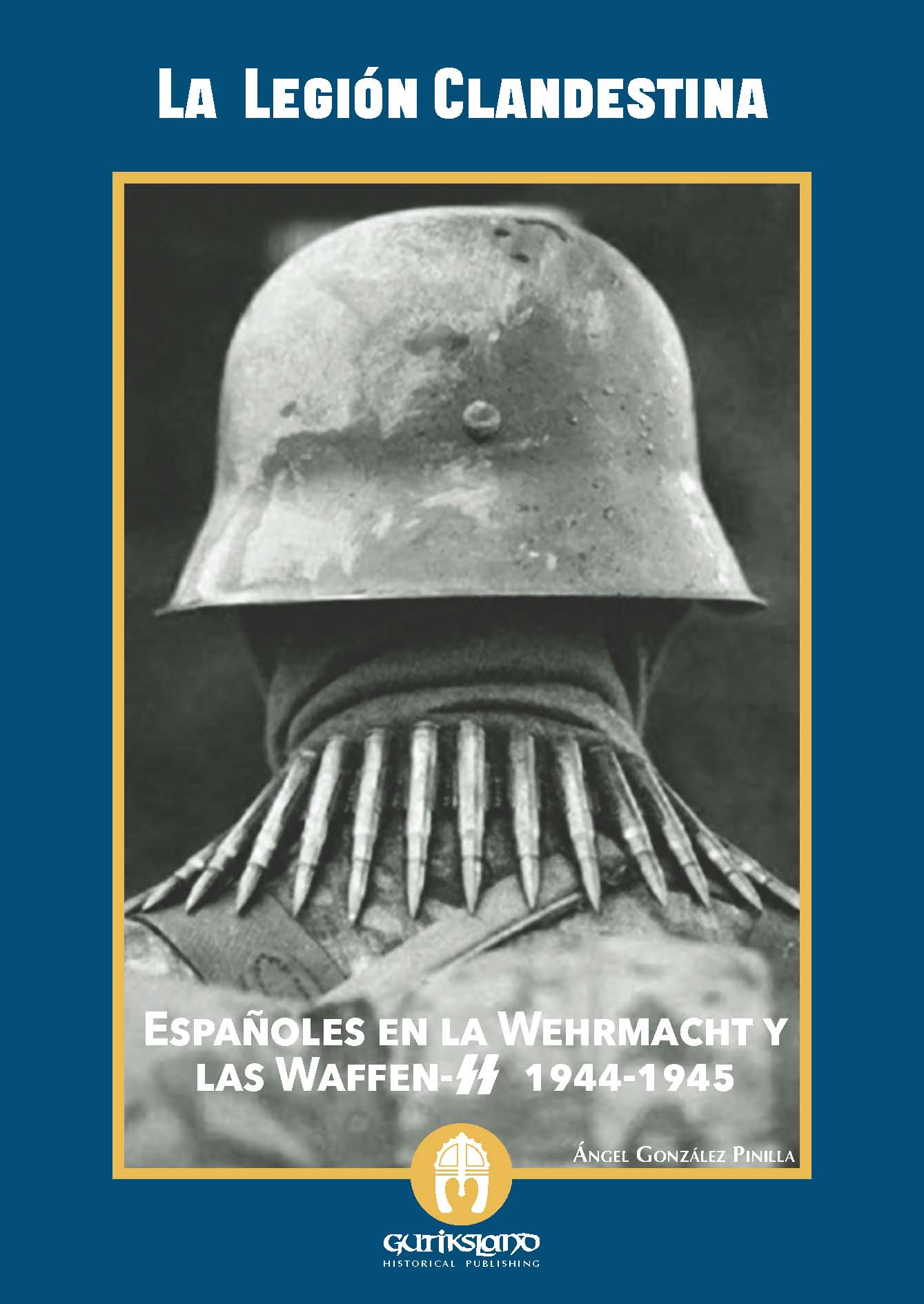

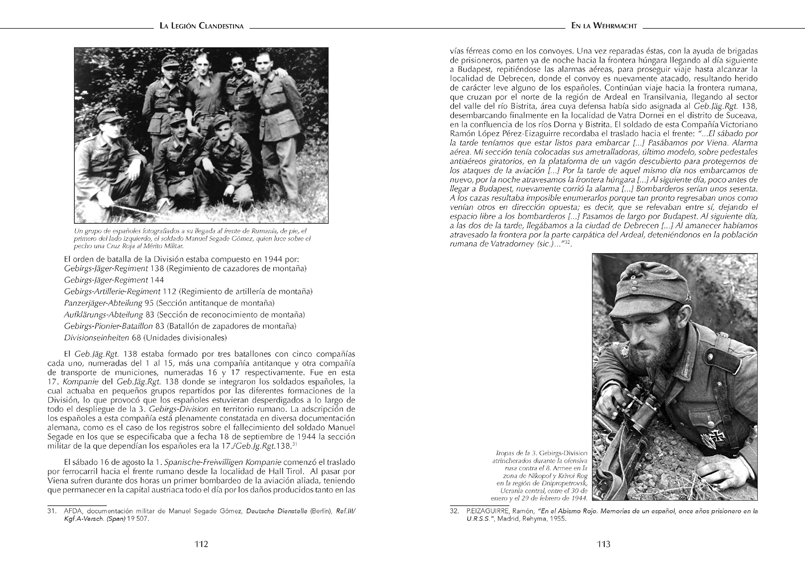
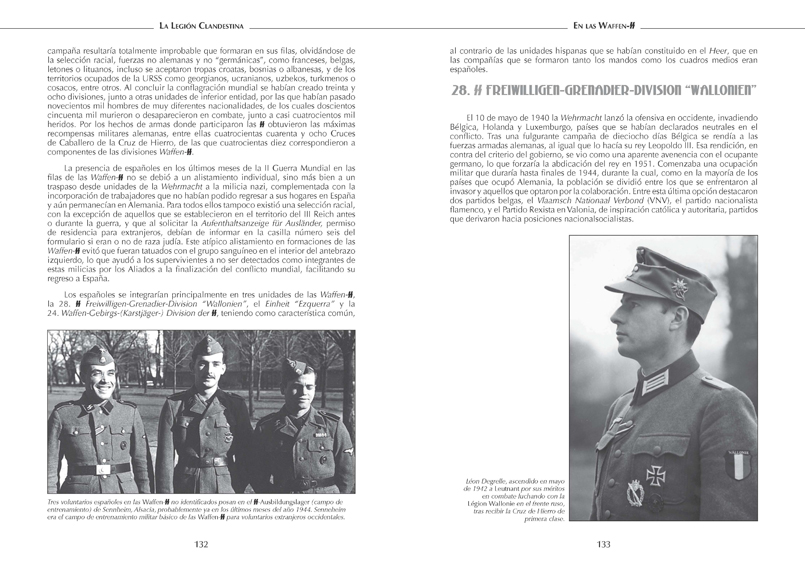
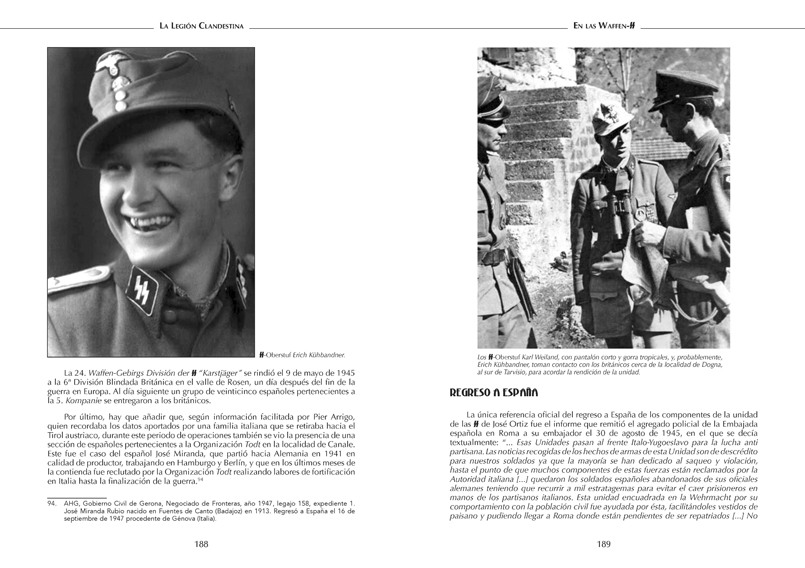
“… ¡España se ve obligada a acceder a la imposición extranjera…! Pero –no lo olvidéis–, en la esencia de aquella cesión obligada, España sabe que ha de reclutar voluntarios para otro lugar. La lucha no ha terminado. España necesitará de vuestra presencia en coyunturas históricas que pronto se han de avecinar…”. Cuando el 6 de marzo de 1944 el coronel García Navarro pronunciaba estas palabras en la arenga dirigida a las unidades de la Legión Azul con motivo de la orden de repatriación, un puñado de españoles en contra de las directrices de Madrid decidieron seguir la lucha bajo pabellón alemán y participar en los postreros días de la II Guerra Mundial en lo que hoy conocemos como la Legión Clandestina o el Batallón Fantasma, encuadrados en unidades de la Wehrmacht y las Waffen-SS, combatiendo en frentes tan dispares como los de Francia, Rumanía, Eslovenia, Italia o Eslovaquia, y en el ocaso del III Reich en la batalla de Berlín.
______________________________________________________________________
“… Spain is forced to submit to foreign impositions…! But, do not forget, at the heart of that forced concession, Spain knows it must recruit volunteers for another cause. The fight is not over. Spain will need your presence in the historic events that are soon to come…”. When, on March 6, 1944, Colonel García Navarro spoke these words in his speech to the units of the Blue Legion on the occasion of the repatriation order, a handful of Spaniards, defying Madrid’s directives, decided to continue the fight under the German flag and participate in the final days of World War II in what we now know as the Clandestine Legion or the Ghost Battalion, integrated into units of the Wehrmacht and the Waffen-SS, fighting on fronts as diverse as those in France, Romania, Slovenia, Italy, and Slovakia, and in the twilight of the Third Reich at the Battle of Berlin.